
A 7-Day Kashmir Itinerary Written by Local Hosts
Every generic Kashmir itinerary is written by someone who visited once. This one is built from hosting 300+ guests — exact driving times, where to book the Gondola before the queue forms, which valley in Pahalgam to skip, and where we actually eat.
Every Kashmir itinerary you'll find online was written by someone who visited once, stayed three days, and padded the rest with copy-pasted suggestions from TripAdvisor. We can tell because they all get the same things wrong: they send people to Betaab Valley first (it's a car park with a river), they don't mention that the Gondola counter queue can eat two hours of your day, and none of them warn you that Sonamarg is closed from November to April.
We've hosted over 300 guests at Maskan in Barzulla, Srinagar. This itinerary is what we actually hand people when they arrive. All distances are from our door. All driving times are real — not Google Maps estimates.
Day 1 — Arrival and Dal Lake at Dusk
Srinagar Airport is 10 minutes from Maskan. Most guests arrive in the afternoon, and that's fine — Day 1 is deliberately light.
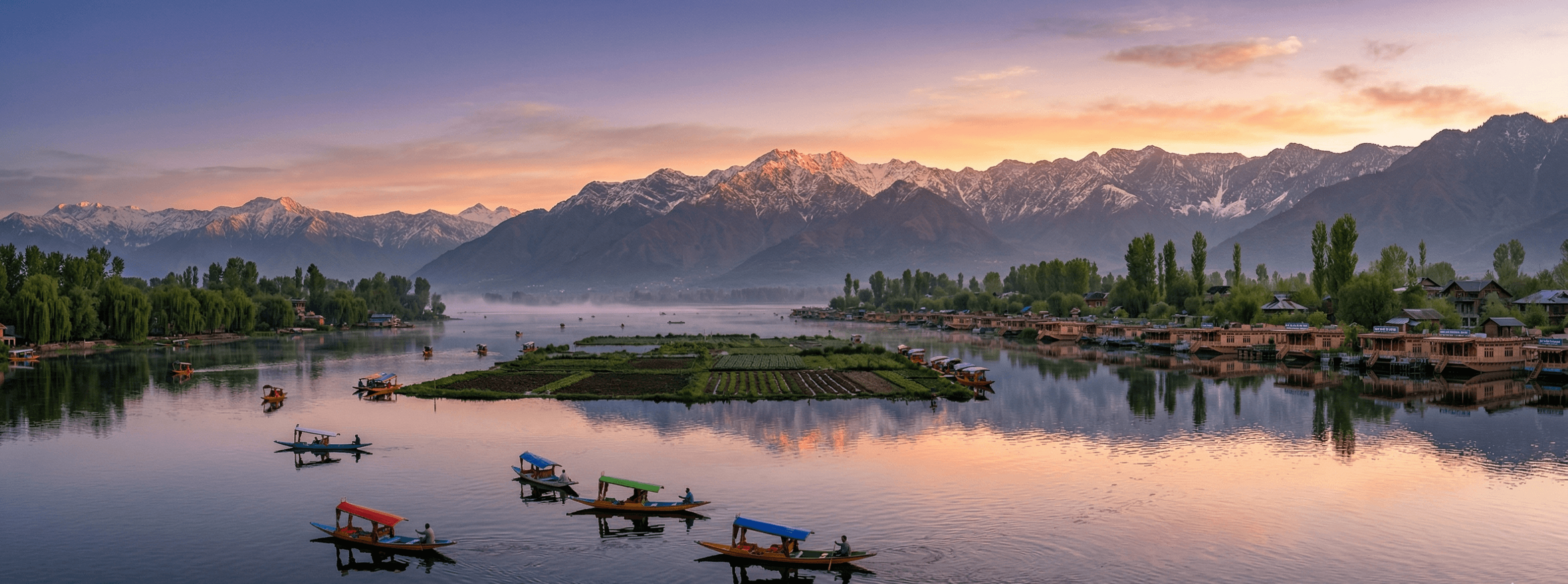
Settle in, get your bearings, then head to Dal Lake — 7km, about 20 minutes from us. The lake is open to explore at any hour, but the early evening light over the Zabarwan mountains is worth timing your first visit around. Take a shikara from one of the ghats along Boulevard Road. Negotiate the rate: ₹500–800 per hour is fair, and the boatmen at Dal Gate will usually open higher. Be straightforward with them and they'll respect it.
The lake itself is not what you expect. It's a working ecosystem — houseboats, floating gardens, a village that lives on the water. A one-hour ride gives you the surface. Two hours starts to give you the texture.
For dinner tonight: Lazeez Restaurant on Boulevard Road, about 20 minutes from us. The Rogan Josh here is what Rogan Josh is supposed to be — dark, slow-cooked, lamb that falls apart. It's the meal we recommend first because it sets the right expectation for the Wazwan ahead. Google Maps →
Day 2 — Floating Market, Old City, Mughal Gardens
Set an alarm. The Dal Lake floating vegetable market runs 5–8 AM only. Shikara vendors load produce at dawn and trade boat-to-boat; by mid-morning it's over. Go early or don't go — there's nothing to see by 9 AM. Take a shikara from the Boulevard Road ghats and ask specifically for the subzi mandi.
After breakfast, head to the Old City and Jama Masjid — 7km, 20 minutes. Built in the 1400s, the mosque has 378 wooden pillars, each carved from a single deodar tree. Dress modestly: covered shoulders and ankles, women cover their heads at the entrance. The lanes around it — Khanqah-e-Moula, Rainawari — are the oldest part of the city and worth wandering without a plan for an hour.
Drive from the old city to Nishat Bagh — 12km, 25–30 minutes. Twelve terraced levels stepping up the Zabarwan hill, with Dal Lake framed below each terrace. If you're visiting in November, go to Nishat Bagh twice — the Chinar trees along the upper terraces turn deep gold and burnt orange, and the light in late afternoon is unlike anything else we can show you here.
Continue to Shalimar Bagh — 18km, 35–40 minutes. The largest of the Mughal gardens, built by Jahangir in 1619. More formal and symmetrical than Nishat Bagh. Worth an hour; don't need two.
End the afternoon at Shankaracharya Hill — 6.4km from Shalimar, 20 minutes. The climb is 243 steps. The reward: the fullest 360-degree view of Srinagar you can get — Dal Lake spreading north, the city laid out below, the Himalayan ridgeline to the east. Go 45 minutes before sunset. The light in that last hour is when the valley makes sense from above.
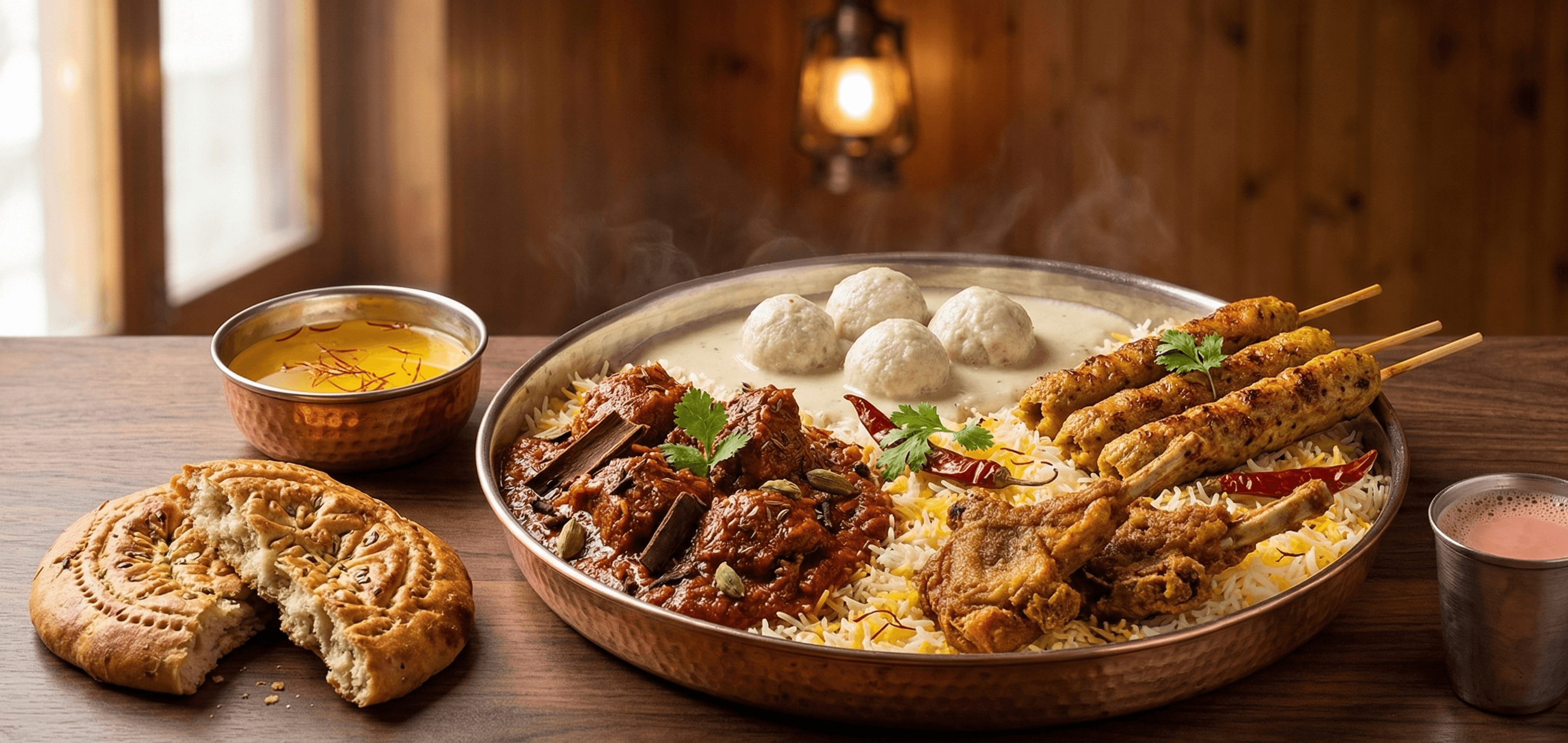
Dinner: Ahdoos Restaurant near Lal Chowk — Est. 1918, one of the most historically important restaurants in the valley. This is where you have your first proper Wazwan: a Trami — the large copper plate — arrives with Tabak Maaz, Rogan Josh, Methi Maaz, and Gushtaba. Eat with your hands if you're comfortable doing so. That's how it's meant to be eaten. Google Maps →
Day 3 — Hazratbal, Nigeen Lake, Slow Srinagar
This is the day most itineraries waste by adding a third Mughal garden. Don't do that.
Hazratbal Shrine is 12km, 20–25 minutes from us. White marble on the northern shore of Dal Lake, clean and quietly significant. Dress modestly and go in the morning when it's calm. It holds a relic of the Prophet and is the most important Muslim shrine in Kashmir — worth understanding what you're visiting, not just photographing it.
Then: Nigeen Lake, 10km, 20–25 minutes from us. This is the one we're most insistent about. Nigeen is connected to Dal Lake but separated by a causeway — smaller, cleaner, and far less visited. No motorboats allowed. Shikara rides here cost less and the silence is real. If you're considering a houseboat stay, this is where we'd send you, not the main Dal — the houseboats on Nigeen are quieter, cleaner, and better value.
Use the afternoon for the Srinagar you haven't seen yet. The Bund along the Jhelum River, the old British-era buildings on the waterfront, the bookshops near Lal Chowk. Kashmir winds down early and evenings are quiet — tea shops and lakeside walks, not nightlife. Learn that rhythm on Day 3 and the rest of the trip will sit right.
Dinner: Amigos or Chakosi Makosi — a different register from the Wazwan spots, useful if you want a lighter meal before two full day-trip days. Google Maps →
Day 4 — Gulmarg (Full Day)
Leave by 7:30 AM. Gulmarg is 50km from Srinagar — 1.5 to 2 hours depending on traffic through Tangmarg. The drive is good: pine forest closing in from both sides as you gain altitude.
The Gondola is Asia's highest cable car and the most in-demand experience in Kashmir. Phase 1 takes you to Kongdori at 2,600m. Phase 2 continues to Apharwat Peak at 3,900m — on a clear day, you can see Nanga Parbat across the Pakistani border. Book the Gondola online before you leave Srinagar. The counter queue in high season runs two hours or more; booking in advance via the official Gulmarg Gondola site cuts that entirely. Phase 2 tickets sell out on peak days — do not assume you can add it on arrival.
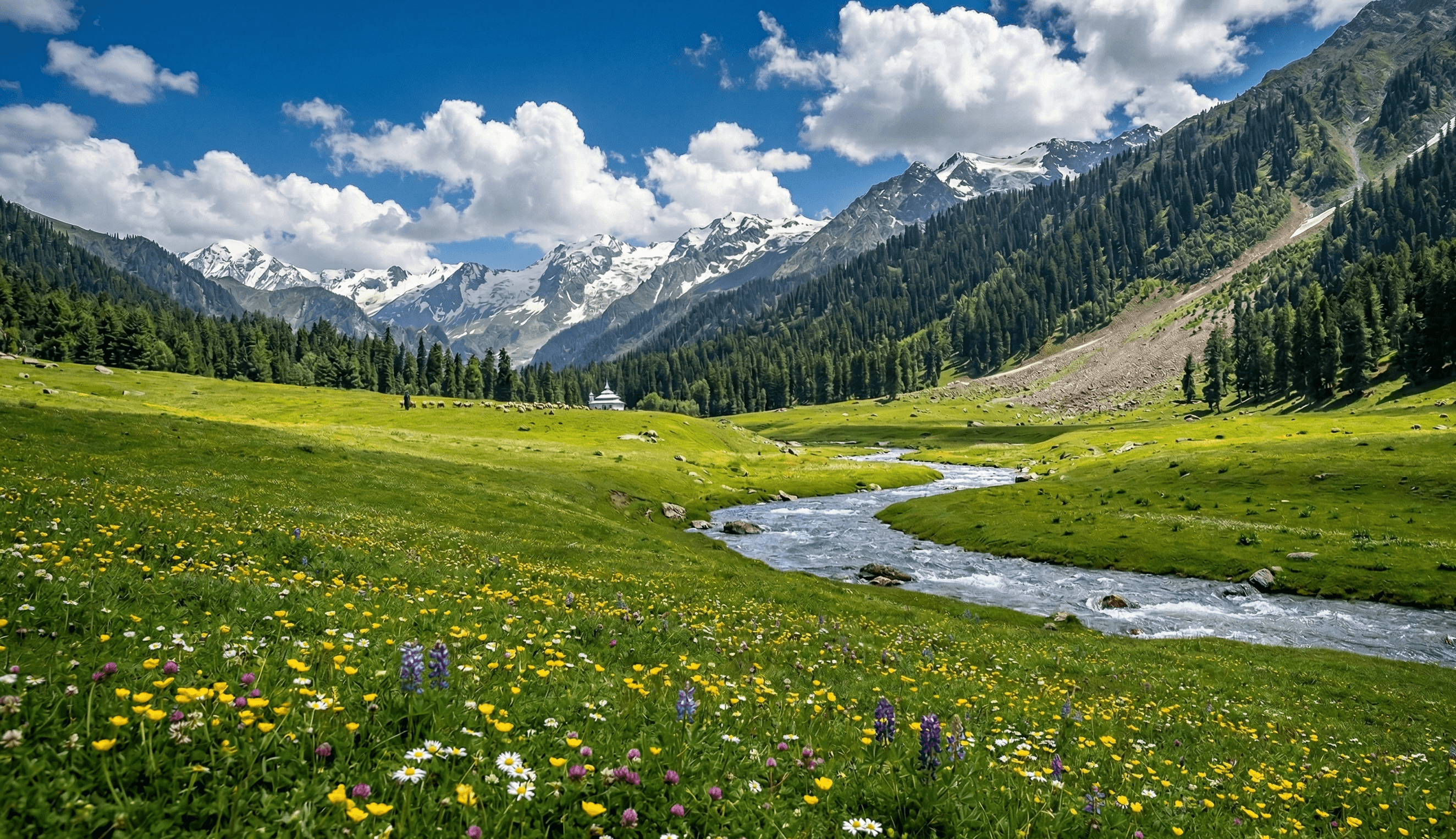
December through March: the skiing here is world-class and costs a fraction of anything comparable in Europe. Rental gear is available in town. Spring and summer bring wildflower meadows across the bowl — the gradient from meadow to snowline is abrupt and strange in the best way.
On the drive back, stop at the dry fruit shops along the Tangmarg highway. Walnuts, almonds, and saffron sold directly by growers at fair prices. Saffron especially: ₹300–400 per gram is reasonable for Grade A. The same quantity costs double on Boulevard Road.
Dinner back in Srinagar: Kareema Restaurant — about 18 minutes from us. The most honest Wazwan in the city, the one we send guests who ask what locals actually eat. Cheapest authentic meal on this list, and one of the best. Google Maps →
Day 5 — Pahalgam and the ABC Valleys
Earlier start today. Pahalgam is 90km — 2 to 2.5 hours. Leave by 7 AM to give yourself a full day in the valley circuit.
The ABC stands for Aru, Betaab, and Chandanwari. Every itinerary presents them as equal. They are not.
Aru Valley is the one we'd keep if we could only do one. 11km from Pahalgam town, a narrow road that opens into a wide alpine meadow backed by snowfields. Far less visited than Betaab, almost no souvenir stalls, and longer walks available into the hills above. Ponies are available here; the ride to the upper meadow takes 45 minutes. ₹500–800 is the going rate — negotiate before mounting.
Betaab Valley is famous because Bollywood films were shot here in the 1980s. It's fine. It's also crowded, gated (₹50 entry), with a large car park at the entrance. Go for 30 minutes, not two hours.
Chandanwari sits at 9,000 feet and holds snow through most of the summer. Sledging points, Maggi stalls at altitude, and the first clear views of the serious Himalayan ridgeline. About 45 minutes from Pahalgam town. Worth doing before the return drive.
Before leaving: walk the Lidder River for 30 minutes in the late afternoon. The river runs fast and cold through the town; the path along its bank — past old wooden bridges, into pine shade — is the part of Pahalgam most visitors miss because they've timed out on the valley circuit. Don't miss it.
Day 6 — Sonamarg (or Winter Alternative)
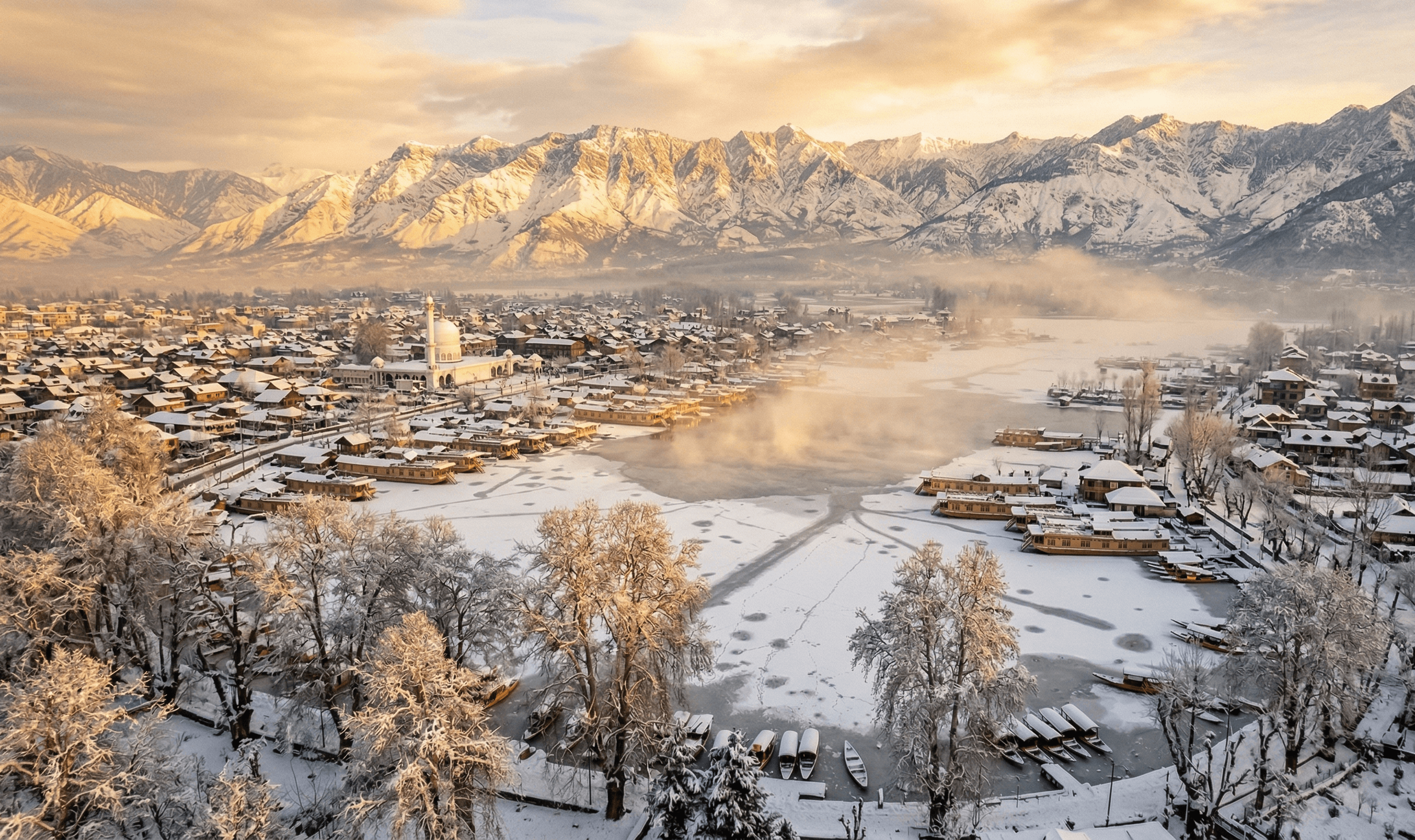
One important caveat first: Sonamarg is closed November through April. The Zoji La Pass seals with snow and the road is impassable. If you're visiting in winter, skip to the alternative below.
In season: Sonamarg is 80–85km, 2.5–3 hours. The drive through the Sindh Valley is the best part — the river runs alongside the road through increasingly wild terrain, narrowing toward the glacier zone.
Thajiwas Glacier is 3km from the main Sonamarg meadow. Walk it in 45–60 minutes each way, or take a pony (₹600–900 return). The glacier is receding — if you've seen photos from 20 years ago, manage expectations — but the scale of the snowfield and the silence up there are still genuinely significant. Bring a warm layer regardless of season; the altitude makes it cold even in July.
The Sonamarg meadow is wide and open in a way the more forested Gulmarg isn't. The "Meadow of Gold" name comes from the autumn wildflowers, but the sense of space fits any season.
Winter alternative (November–April): Use this day for Pari Mahal — a Mughal-era garden on a hill above Dal Lake with one of the best panoramic views of the city and lake together. Then go deeper into the Old City: the Khanqah-e-Moula, the Shah Hamdan Shrine on the Jhelum, and the paper-mache and carpet workshops in the Rajouri Kadal area — none of which appear in tourist maps, but all of which are the actual craft economy of the valley.
Day 7 — Final Morning: Shopping and the Airport
Srinagar Airport is 10 minutes from Maskan. Even for a noon flight, you have a full morning.
Start at Lal Chowk bazaar — 3km, 10 minutes from us. Kashmiri saffron, dry fruits, shawls, and genuine craft goods at half the price you'd pay on Boulevard Road. The rule we give every guest: negotiate on everything except saffron from a certified seller (the price is the price), and don't buy pashmina off the street — the real ones are sold in registered emporiums and cost accordingly. A genuine pashmina shawl starts at ₹3,000–5,000; anything cheaper is wool.
One stop we put on every guest's map before they leave: Moonlight Walnut Fudge near Boulevard Road. Making walnut fudge since 1896. The walnut ice cream is genuinely unlike anything else you'll eat in India, and the fudge travels well. It's the one food souvenir from Srinagar that people write to us about after they've gone home. Google Maps →
The most underrated final morning move: do nothing. Sit with Kahwa, watch the Chinar trees from wherever you're staying, and let the valley be quiet around you one more time. That's the thing people consistently underestimate about Kashmir — and the thing they mention first when they write to us after they've left.
Practical Notes
- Gondola: book online. The official Gulmarg Gondola website takes advance bookings. Phase 2 tickets sell out on peak days — April–May and July–August especially. Never rely on the counter queue.
- Shared cabs save significant money on day trips. Srinagar to Gulmarg, Pahalgam, and Sonamarg all run shared taxis from dedicated stands — roughly ₹150–250 per seat versus ₹2,500–4,000 for a private car. Ask your host for the current stand locations before you go.
- Carry cash. Card machines are unreliable outside major hotels in the city, and mostly non-existent in Pahalgam, Gulmarg, and Sonamarg town. ATMs in Srinagar work fine — plan accordingly before day trips.
- Build a buffer day if going overland. The Jammu–Srinagar highway closes without much warning — landslides, snowfall, security situations. If your schedule has no slack, fly out of Srinagar rather than relying on the highway back to Jammu for a connecting flight.
- Weather changes fast above 2,500m. A clear Srinagar morning can mean cloud and cold rain at Gulmarg by noon. Always carry one warm layer on day trips. Always.
- Book accommodation early for peak season. April–May (tulip season) and July–August fill months in advance. Accommodation sorted first, everything else second.
- What's overrated: Boulevard Road market (tourist trap density is high, everything overpriced), Betaab Valley as a main event, and houseboat stays on the main Dal Lake — Nigeen Lake houseboats are quieter, cleaner, and better value.
- What people always underestimate: the Old City and the Jhelum Bund, Nigeen Lake, and how much Kashmir rewards slowing down. Guests who fight the pace leave disappointed. The ones who accept it leave planning to come back.
Written by
Maskan by Rafiqi Estates
Sabiya has lived in Srinagar her whole life and has hosted over 300 guests at Maskan. She writes what she knows — from the inside out. About Maskan →
More from the Blog
What Kashmir Is Actually Like in Winter
10 min read
The Srinagar Food Guide: Where We Actually Send Our Guests
10 min read
Six Kashmir Places That Reward the Curious
8 min read
Service Apartment vs Hotel in Srinagar: What We've Learned Hosting 200+ Groups
8 min read
Stay at Maskan in Srinagar
Fully furnished apartments from ₹3,000/night. 5.0 stars on Airbnb. Host Sabiya lives next door and knows every good restaurant, shortcut, and honest taxi driver in the city.