
Six Kashmir Places That Reward the Curious
Beyond Dal Lake, Gulmarg, and Pahalgam — Kashmir has places that most tourists never find. Here are six that we recommend to guests who want the less-visited side: Nigeen Lake, Kokernag, Verinag, Dodhpathri, Gurez Valley, and the Old City heritage walk.
Everyone goes to Dal Lake. Everyone does Gulmarg. Both are worth it — genuinely beautiful places that deserve their reputation.
But Kashmir is much larger than the postcard version, and most tourists see maybe 30% of it. The other 70% is quieter, often wilder, and in many ways more interesting. These are the places we tell guests about when they ask what most visitors miss.
1. Nigeen Lake — The Version of Dal You Imagined
Nigeen Lake sits right next to Dal Lake but receives a fraction of the visitors. The water is cleaner, the vendors fewer, the atmosphere genuinely peaceful. Surrounded by willow and poplar trees with the Himalayan mountains reflected in still water — it's what most people imagine Dal Lake will be like before they arrive and find it crowded.
We actually recommend staying in a houseboat on Nigeen over Dal Lake for guests who want the authentic Kashmir houseboat experience. The boat itself is the same quality; the difference is you're not surrounded by 50 other boats and a flotilla of vendors trying to sell you pashmina.
About 20–25 minutes from Maskan. Year-round, best April–October.
Best for: Couples, anyone wanting the houseboat experience without the crowds, photography.
2. Kokernag — The Garden Kashmir Forgot to Tell Anyone About
Called the "Crown of Gold of Kashmir" in local lore, and almost entirely overlooked by tourists. Kokernag has the largest freshwater spring in Kashmir — crystal-clear water gushing from the foothills, flowing through botanical gardens with exotic flowers and Chinar trees. There's also Asia's largest trout farming complex here, which sounds strange but is genuinely fascinating to walk through.
The spring water stays cold year-round and locals believe it has therapeutic properties. The gardens are immaculate. And because almost no one knows this place exists, you'll often have sections of it nearly to yourself.
70–75 km from Srinagar, about 2–2.5 hours. Go in April–August when the gardens are at their best. Can be combined with a Pahalgam day trip if you're already heading in that direction.
Best for: Nature lovers, families wanting something different, photographers who are tired of the standard Kashmir shots.
3. Verinag Spring and Mughal Garden — Where the Jhelum Begins
This is where Kashmir's most important river starts. The Jhelum — the river that flows through Srinagar, through the Mughal gardens, past the Bund where Chai Jaai sits — begins as a spring at Verinag. Emperor Jahangir built a garden around it in 1620, and the octagonal stone basin with 24-arched arcade that remains is one of the finest pieces of Mughal architecture in the valley.
The spring water is so clear and deep it looks almost blue. The reflections in the basin are perfect. The surrounding Pir Panjal mountains provide a dramatic backdrop. On a weekday morning, you'll likely be nearly alone here.
About 80 km from Srinagar, roughly 2 hours. Worth combining with a Pahalgam trip. Afternoons are beautiful here in spring and early summer.
Best for: History lovers, photographers, anyone who wants a quiet and slightly profound experience.
4. Dodhpathri — Gulmarg Without the Gondola Queues
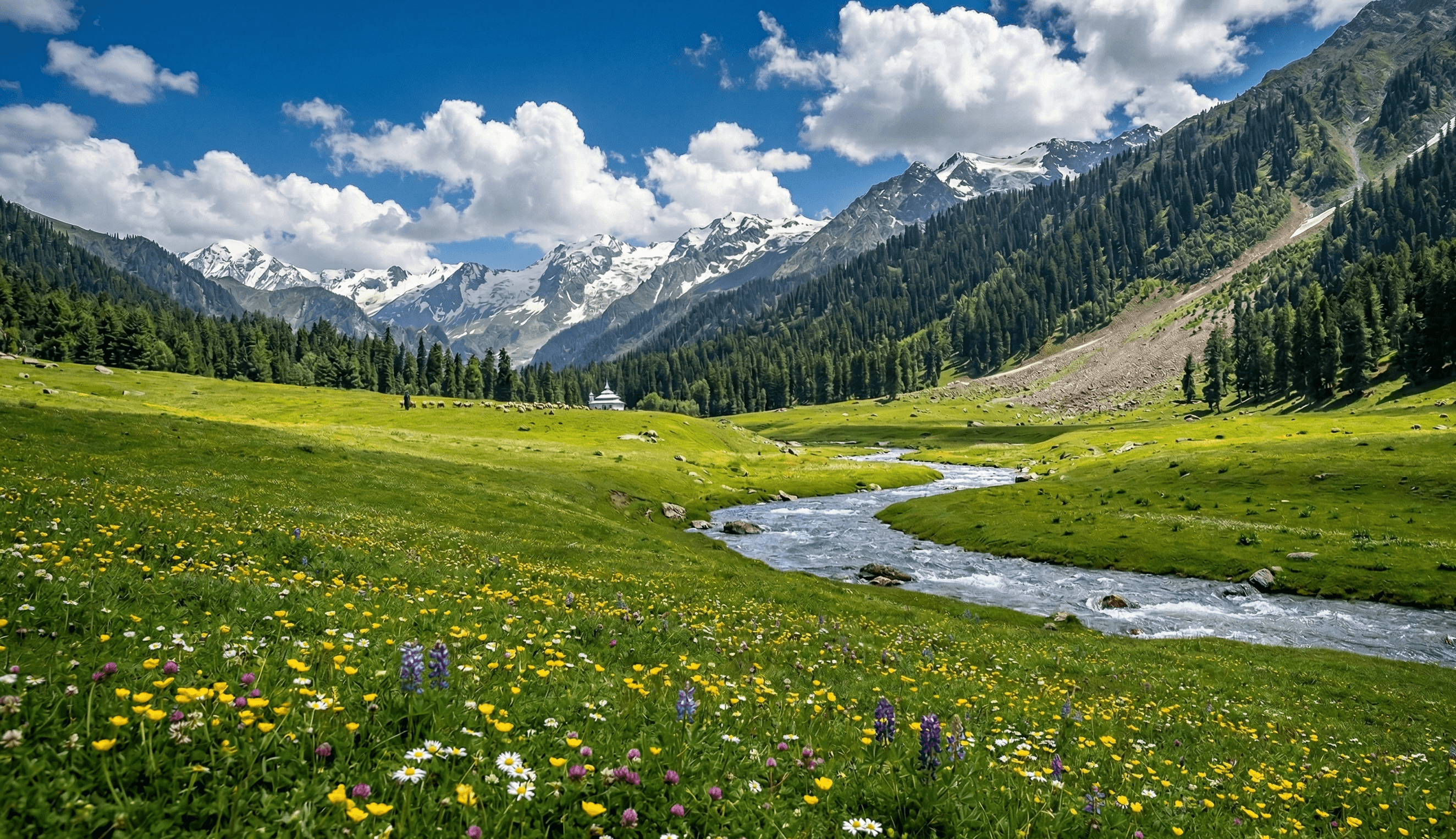
Pristine alpine meadows at 8,900–10,600 feet, the Shailganga River running through them, Deodar and pine forests on the slopes, shepherds grazing cattle in the distance. Dodhpathri offers everything Gulmarg promises — mountain scenery, clean air, a sense of real wilderness — without the cable car queues and the commercial infrastructure that comes with being famous.
It was only recently opened for tourism and is still genuinely undiscovered by the mainstream Kashmir tourist circuit. You can visit for a day or camp overnight for a more immersive experience.
For serious trekkers: the multi-day Dodhpathri–Tosamaidan Trek passes through seven alpine lakes and is considered one of Kashmir's finest treks. Almost no one in the general travel world knows about it.
About 40 km from Srinagar, 1–1.5 hours. Open mid-June to mid-October only.
Best for: Trekkers, anyone who wants Gulmarg-level scenery without Gulmarg-level crowds, photographers wanting something genuinely different.
5. Gurez Valley — The Kashmir That Time Hasn't Reached
This one requires real commitment. Gurez Valley is 130 km from Srinagar, about 4+ hours by road, at 8,000 feet near the Line of Control. It's remote in a way that the other destinations on this list aren't.
What you find there: the emerald Kishanganga River cutting through a wide valley, snow-capped peaks above it, traditional wooden-architecture villages where the Dard-Shina ethnic community has preserved an ancient culture largely intact. The trekking is world-class — through dense pine forests, across wildflower meadows, over high passes. Wildlife includes snow leopards and Himalayan brown bears.
The valley was barely accessible to civilians until recently and remains one of Kashmir's most authentically untouched destinations. Road closes November–March due to snow. Plan for a minimum of 2–3 days to do it properly — a day trip is technically possible but leaves you spending most of the day in the car.
Best for: Serious trekkers, adventure travellers, anyone who wants to experience Kashmir that hasn't changed in a generation.
6. The Old City Heritage Walk — Srinagar's Living History
This one is right in the city but still missed by most tourists who stick to Dal Lake and the gardens. The old quarter of Srinagar — the lanes around Jama Masjid, the traditional bazaars, the mohallas with their intricate wooden architecture — is one of the few places in India where medieval urban fabric has survived largely intact.
Walk the narrow lanes in the morning. The wooden houses with carved balconies and latticed screens have been here for centuries. Visit traditional bakeries that still make Kashmiri bread in clay ovens. Stop at a chai shop and have Noon Chai with strangers. The Jama Masjid itself — 378 hand-carved wooden pillars, built in the 1400s — is one of the finest buildings in the city and receives far fewer visitors than the Dal Lake area.
Going with a local guide adds significant depth here. If you're staying at Maskan, Sabiya can connect you with people who know these streets properly.
Best for: History lovers, architecture enthusiasts, photographers, anyone who wants to understand Srinagar beyond its famous lake.
A Note on Timing
Nigeen Lake and the Old City are accessible year-round. Kokernag, Verinag, and Dodhpathri are best April–October. Gurez Valley is summer-only (open June–October). If you're visiting in winter, the Old City and Nigeen Lake are the standouts from this list — both have a different and equally compelling character in the cold months.
Written by
Maskan by Rafiqi Estates
Sabiya has lived in Srinagar her whole life and has hosted over 300 guests at Maskan. She writes what she knows — from the inside out. About Maskan →
More from the Blog
A 7-Day Kashmir Itinerary Written by Local Hosts
11 min read
What Kashmir Is Actually Like in Winter
10 min read
The Srinagar Food Guide: Where We Actually Send Our Guests
10 min read
Service Apartment vs Hotel in Srinagar: What We've Learned Hosting 200+ Groups
8 min read
Stay at Maskan in Srinagar
Fully furnished apartments from ₹3,000/night. 5.0 stars on Airbnb. Host Sabiya lives next door and knows every good restaurant, shortcut, and honest taxi driver in the city.