
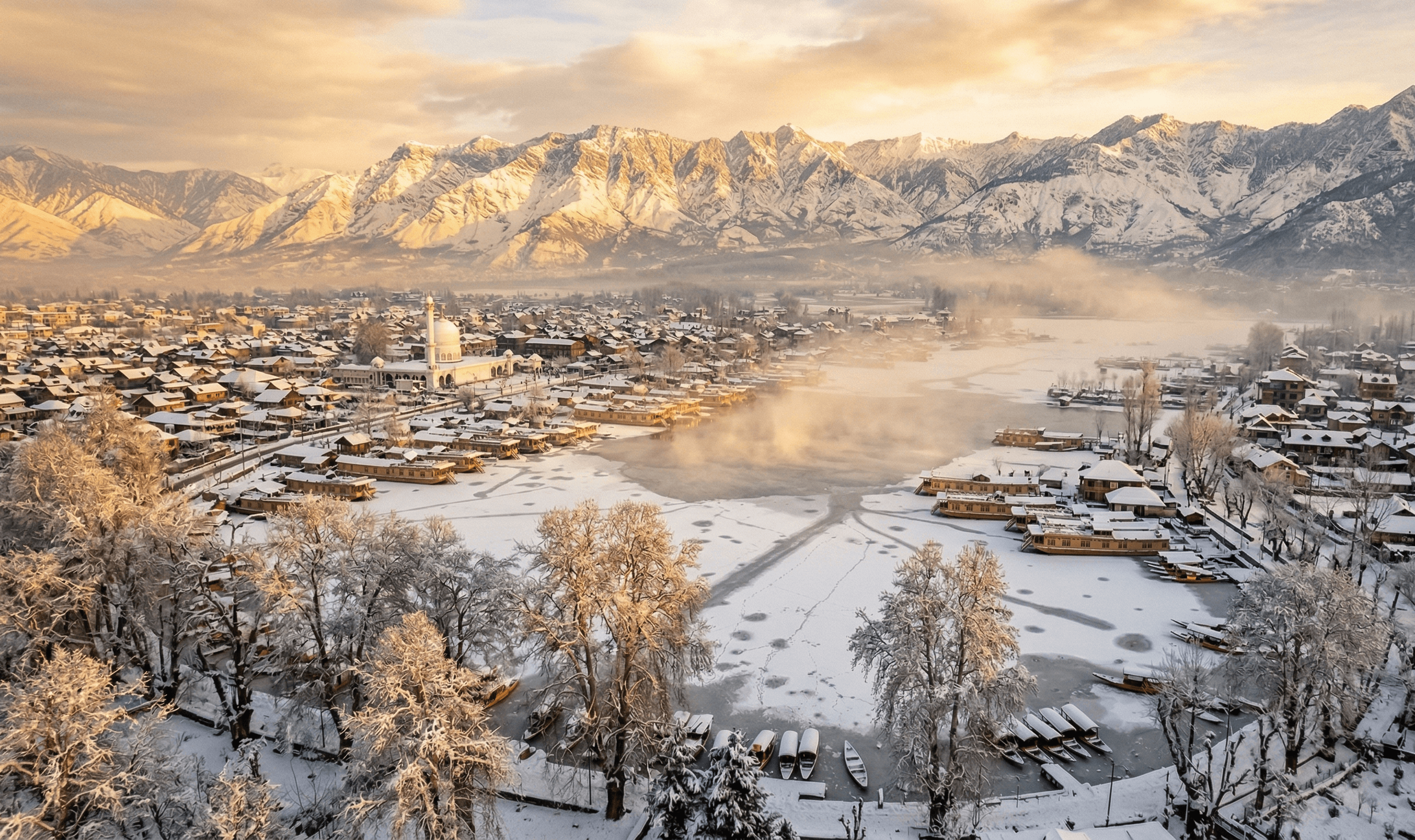
What Kashmir Is Actually Like in Winter
The summer version of Kashmir is everywhere online. This is the other story — Harissa breakfasts at 6 AM, a frozen waterfall near Tangmarg, Chinar trees in deep gold, and the valley almost entirely to yourself. An honest guide from your hosts in Srinagar.
Most people who ask about Kashmir in winter are half-expecting us to talk them out of it. They've read about the cold, the fog, the closed roads. They've been told to come in summer, maybe July, when the meadows are green and the Dal Lake is full of boats. That's not bad advice.
It's just incomplete advice.
We've been hosting guests at Maskan through every month of the year. The ones who come between November and February are a different kind of traveller — quieter, more curious, less interested in the standard Kashmir itinerary. Almost all of them say the same thing when they leave: this was better than I expected. Not despite the cold. Because of it.
November: The Month Nobody Talks About
If we could send every guest in one month, it would be November. Not because it's the warmest or the most convenient. Because the Chinar trees are burning.
Chinar is Kashmir's oldest tree — enormous, broad-canopied, planted in rows along the Mughal gardens and across the old city. By late October the leaves begin to turn, and through November they go deep gold, burnt orange, a dark copper-red. At Nishat Bagh, the Mughal garden on the eastern shore of Dal Lake with twelve terraces running down to the water, the Chinar ring the entire garden. The Zabarwan hills are behind you. The lake is below. It's the kind of thing you want to see twice in the same day — once in the clear morning and again in the late afternoon when the light is low and the colours deepen further.
We tell every November guest: go to Nishat Bagh. Go twice. Do not miss it for a houseboat tour you can do in any season.
November temperatures sit between 5°C and 18°C during the day. Cold enough that you want a jacket, comfortable enough to walk for three hours without thinking about it. The tourist crowds have dissolved. The city is genuinely its own again. Dal Lake in November is quieter than any other month — shikaras are unhurried, the vendors more relaxed, the water grey-blue and reflective in a way summer photographs never capture.
The Harissa Ritual
There is one thing you can only do in Srinagar in winter. One thing that vanishes completely when spring arrives and does not come back until the cold does. Get up early, step out into 3°C air, and go eat Harissa.
Harissa is slow-cooked lamb — whole cuts, cooked overnight on low heat with rice and Kashmiri spices, stirred through the night until it becomes dense, intensely savoury, and warming in a way that feels almost medicinal in the cold. It's served hot in a simple bowl with local bread, in small rooms that fill up with working men and local families who have been eating this breakfast for generations. There is no menu. There is no décor. There is Harissa, and there is Noon Chai, and by 8 AM it is gone.
That last part is not an exaggeration. The best spots sell out before 8 AM. Some days by 7:30.
Kong Posh Harissa in Ram Bagh is our first recommendation — 5 minutes from Maskan, one of the most consistently reliable spots in the city for this dish. No frills. No announcement. You know it's good because of who's eating there. Google Maps →
If you want the version with deeper history behind it: Harissa at Dilshad Restaurant, Maisooma Chowk. About 10 to 15 minutes from us. One of the most respected names for Harissa in the valley — the kind of place that has been in the same spot for decades and has never needed to advertise. Google Maps →
Pair either bowl with Noon Chai. It's pink, it's salty, it's made with baking soda and milk and Kashmiri tea leaves, and it sounds like it shouldn't work. It works completely. Set the alarm. This is the real winter morning in Srinagar.
Tea, Warmth, and the Bund in Winter
Kashmiri tea culture runs deep, and in winter it becomes the entire structure of the day. You're not just having a drink — you're doing what every local does, which is finding warmth in a specific room with a specific cup and not rushing away from it.
Kahwa, the green tea brewed with cardamom, cinnamon, saffron, and sometimes almonds, is what you'll find in most homes and good guesthouses. Noon Chai — the pink salted tea — is the working-class morning drink, paired with bread or Harissa. Both are worth understanding before you arrive, because the person pouring them takes the distinction seriously.
For the best single tea experience in the city: Chai Jaai on The Bund, overlooking the Jhelum River. Victorian interiors, large windows over the water, a menu that lists varieties you won't find elsewhere. They serve Harissa on winter mornings as well. It's an 18-minute drive from Maskan and worth the trip even in bad weather — perhaps especially in bad weather, when the river is grey and the room is warm and there's nowhere pressing to be. Google Maps →
The pheran — the long, loose Kashmiri cloak worn over clothes in winter — deserves a mention. Locals wear it throughout the cold months, sometimes with a Kangri (the small clay pot of coals carried under the cloak for warmth) tucked inside. If you're staying any length of time and you see one for sale, buy it. It's genuinely practical.
Gulmarg in Winter
50 km from Srinagar, at 2,650 metres elevation, Gulmarg is one of the better ski destinations in Asia. From December through March it receives consistent snowfall. The runs are serious — not groomed European-style pistes but open mountain terrain that skiers travel specifically to access. Lift passes and gear rental cost a fraction of what you'd pay in Europe or Japan.
The Gondola — Asia's highest cable car — operates year-round and takes you to 3,900 metres in two stages. Phase one ends at Kongdoori; phase two reaches the ridge. At the top, on a clear day, the Himalayan peaks visible across the range make you understand exactly where you are on the map. Summer haze never gives you this clarity.
You do not need to ski to justify the Gondola. Walking around the upper meadow at 3,900 metres — the silence at that altitude, the scale of the landscape, pine trees buried to their necks in snow — is its own thing entirely. Give yourself a full day for Gulmarg, not a half-day.
One honest note: at 3,900 metres in January it is genuinely cold. Wind adds to it. Multiple light layers work better than one heavy coat. Rental gear is available in Gulmarg town at the base if you haven't packed for mountain conditions.
The Frozen Drang Waterfall
46 km from Srinagar, near Tangmarg on the road to Gulmarg, there's a waterfall that most winter visitors miss entirely. In summer, Drang falls are pleasant. Between December and February, they freeze.
The transformation is complete. The entire cascade becomes a curtain of hanging ice — thick columns, frozen mid-fall, with icicles extending outward from the rock face and ice walls building up at the base. January and February are when it's typically fully frozen, though a cold December can produce it earlier. The walk from Tangmarg is 3.5 km. ATVs do the route and back for around ₹1,000 to ₹1,500.
If you're already going to Gulmarg, Drang adds about 45 minutes to the same trip and is worth the detour.
December and January: The Honest Version
Chille Kalan is the 40-day deep winter that Kashmiris have named and tracked for centuries. It runs from roughly December 21 to January 31. The valley knows it as the most demanding stretch of the year — temperatures regularly drop below minus 5°C at night in Srinagar, sometimes colder. The Jhelum slows. Dal Lake can develop a thin ice shelf along its edges. Some years there is snow in the city proper — lanes in the old quarters covered white, the Mughal gardens under frost, the chinar trees stripped bare and black against grey sky.
Sonamarg is inaccessible from November through April. The Mughal Road and several mountain routes close with the first serious snowfall. Power cuts increase in frequency. You need accommodation with backup power and someone who knows current road conditions before you plan any day trip.
None of this makes December and January a mistake. What it gives you is the valley with almost no other visitors, a city living at its own pace without adjustment for tourism, and the specific quality of winter Kashmir that no summer visit can replicate — the smell of woodsmoke at 7 AM, the quiet of snowfall, the extraordinary food culture that only operates in cold.
January is when you come if you want the valley entirely to yourself. That's the tradeoff.
February and the First Signs
Chille Kalan traditionally ends on January 31st. February arrives with the same cold, but something in the air shifts. The worst is behind the valley, and it knows it.
Late February brings the almond blossom — the first flowering of the year. Almond trees in Kashmir bloom before anything else, before the famous Tulip Garden opens in April, before the willows along the lake turn green. They flower in pale pink and white while there's still frost in the morning, and that contrast — bare orchards suddenly in blossom, snow still on the distant hills — is one of the more quietly affecting things you can see in the valley.
February visitors get the tail of genuine winter with the first momentum of spring. The roads are more reliable than January. Gulmarg still has full snow cover. Harissa is still running. The city is still free of crowds. It's an underrated window, and guests who come in late February often leave with the feeling that they timed it exactly right — which they did.
Practical Notes for Winter Kashmir
- November is the sweet spot for first-time winter visitors — Chinar colour, accessible roads, daytime temperatures between 5–18°C, and the city at its most relaxed.
- December–January is for travellers who specifically want deep winter. Cold, quieter, more demanding, and more rewarding for it.
- February is the underrated month — winter conditions but loosening, almond blossoms, Gulmarg still fully operational.
- For Harissa: set an alarm. Arrive before 7:30 AM. The best spots are gone by 8. This is not an exaggeration.
- Layer, don't bulk. Temperature swings between morning and afternoon in the valley are significant — sometimes 12 to 15 degrees difference. Layering handles this; one heavy jacket doesn't.
- Sonamarg road closes November–April. Plan day trips accordingly and check conditions with your host the evening before.
- Power cuts increase in winter. Book accommodation with inverter backup. Our apartments at Maskan have continuous inverter power specifically for this reason.
- Drang Waterfall + Gulmarg is a single day trip. Both are off the Tangmarg road; combine them. Allow a full day, not a half-day.
- Flights connect reliably. Srinagar Airport operates year-round. Ground connections to Jammu via the highway occasionally close in heavy snowfall — fly in if your schedule is fixed.
Written by
Maskan by Rafiqi Estates
Sabiya has lived in Srinagar her whole life and has hosted over 300 guests at Maskan. She writes what she knows — from the inside out. About Maskan →
More from the Blog
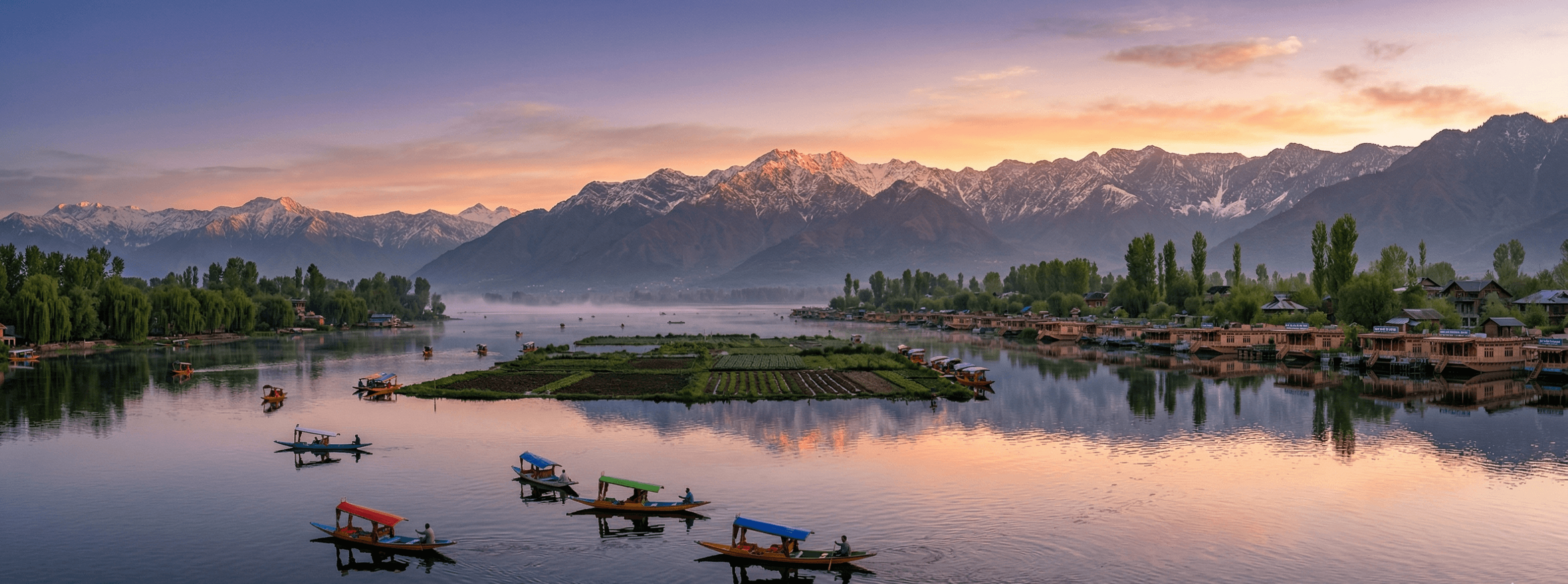
A 7-Day Kashmir Itinerary Written by Local Hosts
11 min read
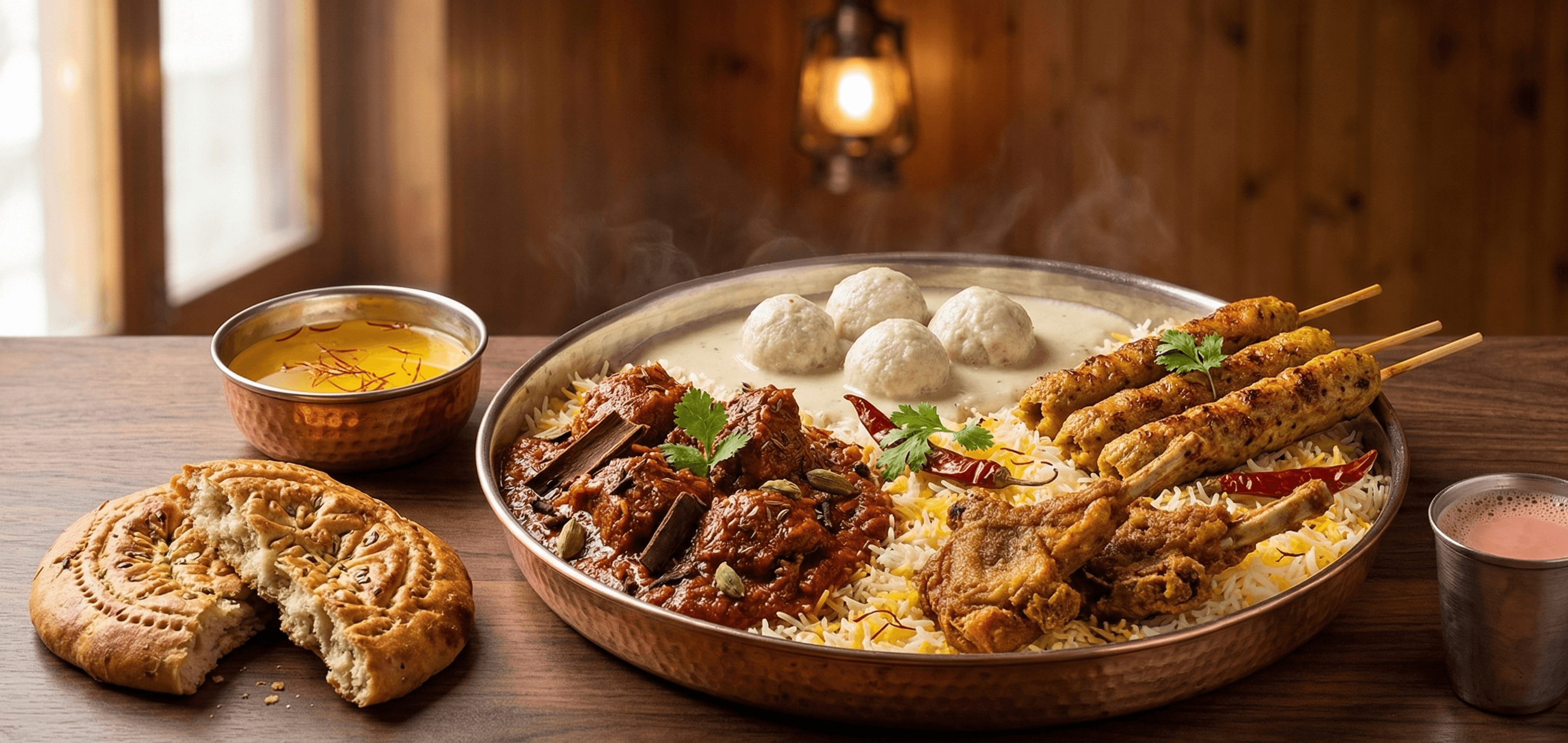
The Srinagar Food Guide: Where We Actually Send Our Guests
10 min read
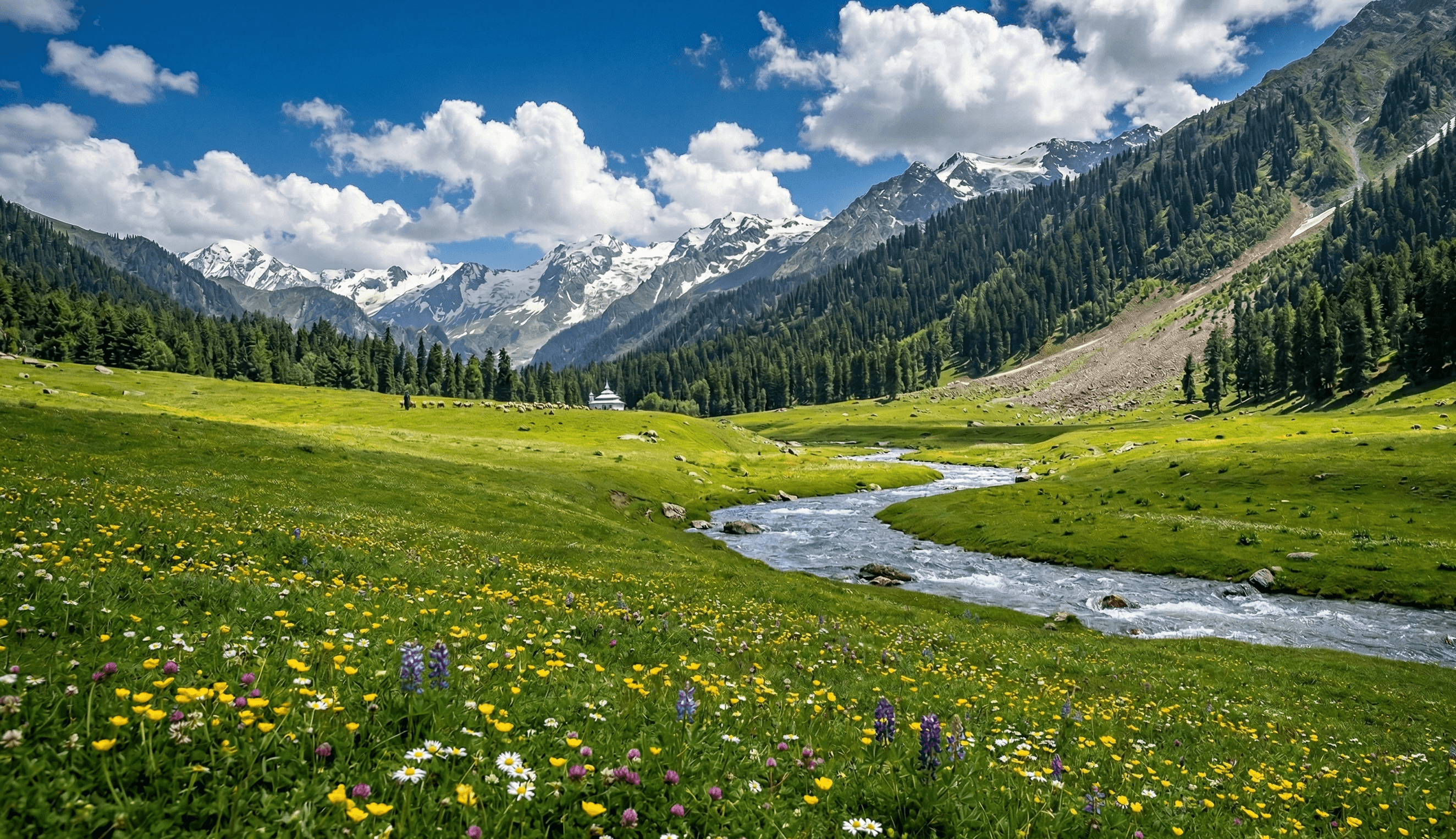
Six Kashmir Places That Reward the Curious
8 min read
Service Apartment vs Hotel in Srinagar: What We've Learned Hosting 200+ Groups
8 min read
Stay at Maskan in Srinagar
Fully furnished apartments from ₹3,000/night. 5.0 stars on Airbnb. Host Sabiya lives next door and knows every good restaurant, shortcut, and honest taxi driver in the city.